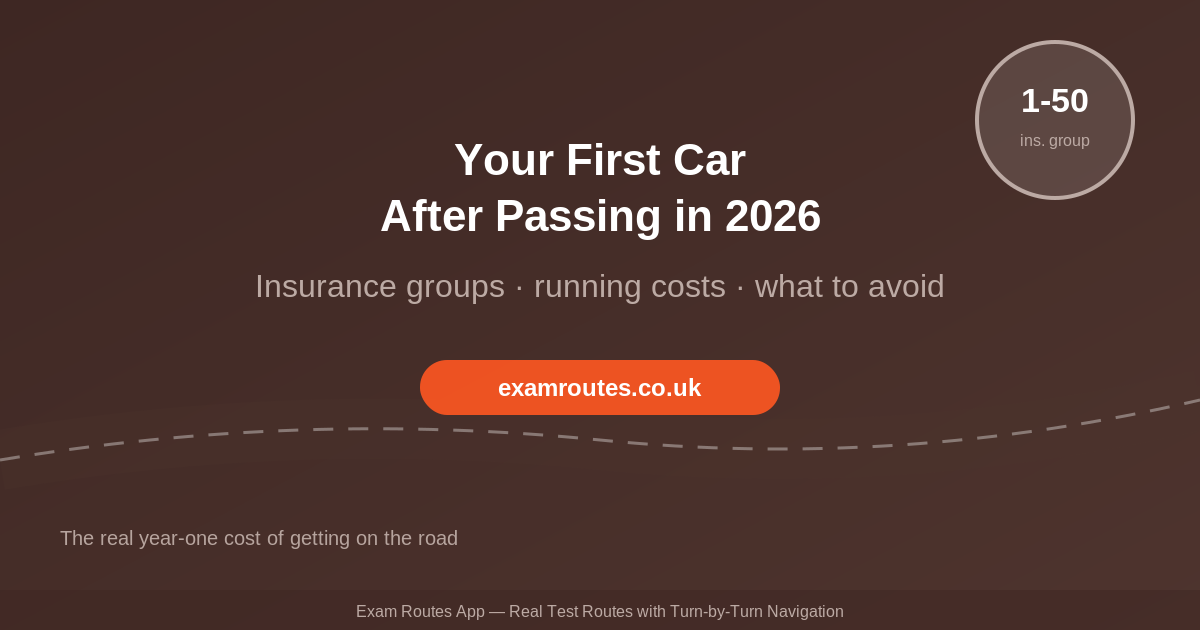
Passing your test is the expensive part finished and the expensive part beginning. For most newly qualified drivers in the UK, the car itself is not the biggest cost in year one — insurance is. Understanding how insurance groups, engine size and telematics interact before you buy will save you considerably more than haggling over the purchase price.
This 2026 guide covers what a first car realistically costs to run, how insurance groups work, which cars keep premiums manageable, and the traps that catch new drivers.
Insurance Is the Number That Should Drive Your Choice
Every car sold in the UK sits in an insurance group from 1 to 50, set by the Group Rating Panel and based on repair costs, performance, security and parts prices. Group 1 cars are the cheapest to insure; group 50 the most expensive.
For a driver who passed this year, the difference between a group 2 car and a group 15 car can be hundreds of pounds a year — sometimes more than the value gap between the two cars. The practical rule is simple: get quotes before you buy, not after. Comparison sites will quote you on a registration or a make and model without any commitment.
What Actually Pushes Your Premium Up
- Age and experience. Nothing moves the number more. Premiums fall sharply with each year of no-claims history.
- Insurance group. Engine size, power output and repair cost all feed into it.
- Where the car is kept overnight. A driveway or garage usually beats on-street parking.
- Annual mileage. Be accurate rather than optimistic — under-declaring can invalidate a claim.
- Modifications. Alloys, exhausts and remaps all raise premiums and must be declared.
- Voluntary excess. Raising it lowers the premium, but only choose an excess you could actually pay.
Telematics: Usually the Cheapest Route for New Drivers
Black box or app-based telematics policies monitor how you drive — speed, braking, cornering, acceleration and often the time of day you drive. For a driver in their first year, they frequently come out cheaper than a standard policy, sometimes substantially.
The trade-offs are real. Many policies penalise late-night driving, and consistently harsh braking or speeding can push your renewal price up or, in some cases, lead to cancellation. If you drive the way you drove on your test, telematics rewards you. If you do not, it notices.
Practise Real Test Routes on Your Phone
The Exam Routes App gives you access to real driving test routes with turn-by-turn navigation. Practise at your own pace and build confidence before test day.
The Full Running Cost Picture
New drivers routinely budget for the car and the insurance and then get caught out by everything else. Here is a realistic annual picture for a small used petrol hatchback in 2026.
| Cost | Typical range per year | Notes |
|---|---|---|
| Insurance | £1,200 – £2,500+ | Highest in year one; falls with no-claims |
| Vehicle tax | £20 – £195 | Depends on CO2 and registration date |
| Fuel | £800 – £1,600 | Based on 6,000 – 10,000 miles |
| MOT | £54.85 max | Annual once the car is three years old |
| Servicing | £150 – £350 | More if something needs replacing |
| Tyres and consumables | £150 – £400 | Averaged across the year |
| Breakdown cover | £40 – £120 | Worth having on an older car |
What Makes a Sensible First Car
The characteristics that keep costs down are consistent: a small petrol engine (typically 1.0 to 1.2 litres), a low insurance group, a common model with cheap and plentiful parts, a full service history, and no modifications. Superminis and small hatchbacks dominate this space for good reason.
Do not overlook the practical side either. If you learned in a manual, a manual first car keeps your skills fresh. If you passed in an automatic, your licence restricts you to automatics anyway.
What to Avoid
- Turbocharged or “sport” versions of otherwise sensible cars. The badge can add several insurance groups.
- Fronting. Putting a parent as the main driver when you are actually the main driver is insurance fraud, and insurers detect it routinely. A claim will be refused and the policy voided.
- Buying before insuring. Always quote first.
- Skipping the history check. Outstanding finance, previous write-offs and mileage discrepancies all show up on a paid check — and none of them show up on a test drive.
- Ignoring the six-point rule. Under the New Drivers Act, six penalty points within two years of passing means your licence is revoked and you retake both tests.
Buying Privately Versus From a Dealer
A private sale is usually cheaper, but you have very limited legal protection — the car must simply match its description. Buying from a dealer costs more and gives you rights under consumer legislation, including protection if the car turns out to be faulty. For a first car with a limited budget, many new drivers find a small independent dealer with a warranty is the sensible middle ground.
Whichever route you take, view the car in daylight, in dry weather, and bring someone experienced with you.
How Exam Routes App Can Help
The best way to protect your no-claims discount and your telematics score is to keep driving the way you drove to pass. The Exam Routes App maps real driving test routes across the UK with turn-by-turn navigation — useful long after you pass for building confidence on unfamiliar roads, and for anyone in your household still working towards their test.
Frequently Asked Questions
What insurance group should a first car be in?
Groups 1 to 10 are the safest bet for a newly qualified driver. Anything above group 15 typically pushes first-year premiums up sharply.
Is black box insurance worth it for new drivers?
Usually yes on price, provided you accept the monitoring. Consistent smooth driving is rewarded, while frequent late-night driving or harsh braking can raise your renewal or, in some policies, end it.
Can my parent insure the car and add me as a named driver?
Only if they are genuinely the main driver. Listing a parent as the main driver when you do most of the mileage is called fronting, and it is fraud.
How much does a first car cost to run in 2026?
For a small used petrol hatchback, budget somewhere between £2,500 and £4,500 in the first year including insurance, tax, fuel, MOT and servicing.
Should I buy petrol, diesel or electric as a first car?
A small petrol car is usually cheapest to buy and insure. Electric cars have low running costs but higher purchase prices and often higher insurance groups, which rarely suits a first-year driver’s budget.
Ready to Pass? Download Exam Routes Now
Not passed yet? Practise real test routes with turn-by-turn navigation and get on the road sooner.