Learning to drive costs more than it used to, and it costs dramatically different amounts depending on where you live. In 2026 the gap between the cheapest and most expensive parts of the UK is wide enough to change how — and where — people learn.
Here is what the regional picture looks like, why the gap exists, and what learners can realistically do about it.
The National Picture
The average hourly rate for a qualified approved driving instructor (ADI) in the UK in 2026 sits at roughly £33–£37, with the midpoint around £35. Across the whole market, published rates range from about £28 to £50 per hour depending on region, instructor and whether you buy lessons in blocks.
That is a substantial increase on a few years ago. Instructor costs have risen across the board — fuel, vehicle finance, insurance and maintenance have all climbed — and the long practical test waiting lists mean many instructors are managing longer relationships with each pupil.
Region by Region
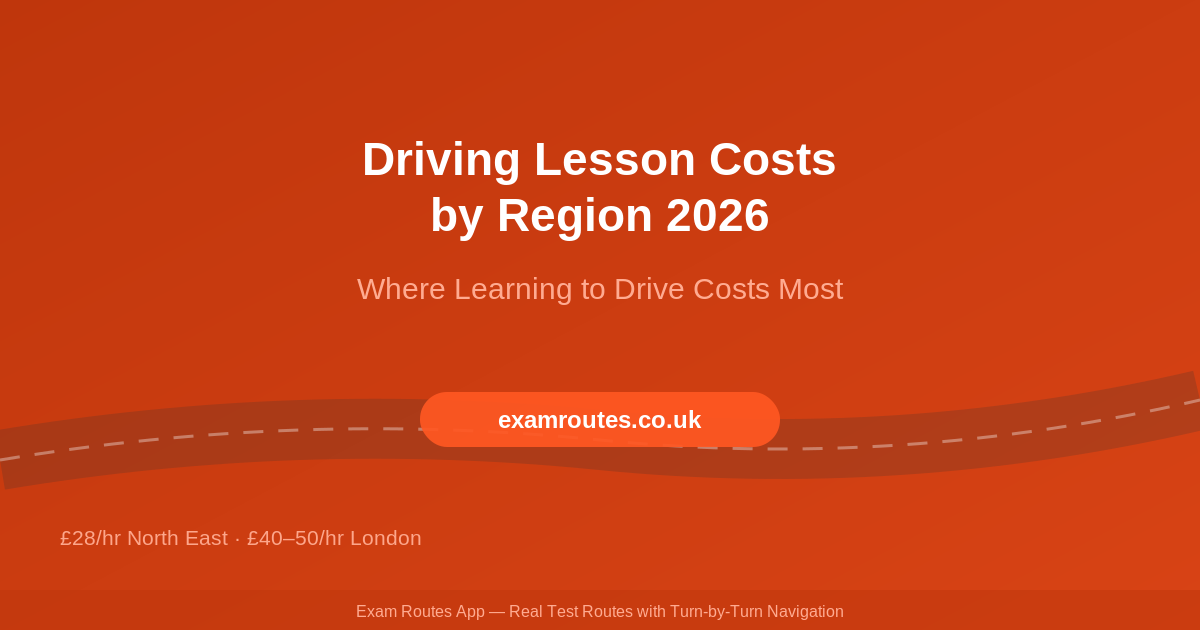
London — the most expensive. Typical rates run £40–£50 per hour, with central zones commonly exceeding £50 and outer boroughs more often in the £35–£42 range. Instructor costs are higher, congestion charges and ULEZ apply, and demand is intense.
South East commuter belt — £35–£42. Kent, Surrey, Berkshire and Hertfordshire track just below London, driven by the same cost pressures.
Oxfordshire, Buckinghamshire and East Anglia — around £32–£36. Broadly at or a little above the national midpoint.
The Midlands — roughly £30–£35. Birmingham, Coventry, Leicester and Nottingham cluster in this band.
The North West and Yorkshire — around £30–£34. Manchester and Leeds sit at the upper end of their regions; smaller towns are noticeably cheaper.
The North East — the cheapest, roughly £26–£32. Learners here can find qualified instructors around £28 an hour.
Scotland and Wales — mixed. Cardiff, Edinburgh and Glasgow behave like large English cities; rural Wales and the Highlands can be cheaper per hour, but instructors may charge travel time to cover distance.
Practise Real Test Routes on Your Phone
The Exam Routes App gives you access to real driving test routes with turn-by-turn navigation. Practise at your own pace and build confidence before test day.
What the Gap Means in Practice
The DVSA’s long-standing guideline is that the average learner needs around 45 hours of professional tuition plus around 20 hours of private practice.
Run that through the regional rates and the difference is stark:
- North East at £28/hr: around £1,260 in lessons.
- Midlands at £33/hr: around £1,485.
- Central London at £45/hr: around £2,025.
That is a spread of up to £765 for exactly the same 45 hours — before you add the £34 provisional licence, the £23 theory test and the £62 weekday practical test fee. And it assumes a first-time pass. Every retest adds another £62 plus the additional lessons most learners take in between.
Why London Costs So Much More
Three factors compound in the capital. Instructors face higher vehicle running costs, insurance and emissions-zone charges. Demand is high and instructor availability is tight. And crucially, London learners often need more hours — the capital’s test centres have the lowest pass rates in the country, because the driving environment is genuinely harder. More hours at a higher hourly rate is the worst possible combination.
How to Reduce the Total Cost
- Maximise private practice. Every hour with a supervising driver in a properly insured car is an hour you are not paying an instructor for. It is the single biggest lever available.
- Buy blocks, carefully. Block bookings typically save £2–£5 an hour. Only commit to a large block once you know the instructor suits you.
- Do not book your test too early. A premature test is £62 plus the lessons you take waiting for the retest.
- Practise the actual test routes. Learners who arrive already familiar with their centre’s roads spend fewer hours being taught those roads at £35 an hour.
- Pass the theory early. The certificate lasts two years and passing early removes a common bottleneck.
- Compare local instructors properly. Rates vary by more than £10 an hour within the same city. Ask about lesson length, block rates and whether the price includes use of the car for the test.
Is a Cheaper Instructor Better Value?
Not necessarily. An instructor charging £38 who gets you test-ready in 38 hours costs less overall than one charging £30 who takes 50 hours. Look at grade, reviews, whether they are a fully qualified ADI rather than a trainee (PDI), and how structured their teaching is. Hourly rate is only half the equation; total hours is the other half.
Frequently Asked Questions
How much is a driving lesson in the UK in 2026?
The national average is roughly £33–£37 an hour, with a range of about £28 to £50 depending on region and instructor.
Where are driving lessons cheapest in the UK?
The North East is consistently the cheapest region, with qualified instructors around £26–£32 an hour. Rural areas elsewhere can also be cheaper.
Why are London driving lessons so expensive?
Higher instructor running costs, emissions charges, intense demand and a harder driving environment that means learners typically need more hours.
How many lessons do I need to pass?
The DVSA guideline is around 45 hours of professional tuition plus about 20 hours of private practice, though this varies widely by individual.
Do block bookings save money?
Usually £2–£5 an hour, but only commit to a large block once you are confident the instructor is a good fit for you.
Ready to Book? Get Route-Ready First
The Exam Routes App gives you the real routes for your test centre so every lesson and every hour of private practice counts.