Car Insurance for New Drivers in the UK 2026: What a First Policy Really Costs
Passing your test is the expensive milestone everyone talks about. Insuring the car afterwards is the one that quietly costs more. For a newly qualified 17-year-old, the first year’s premium can comfortably exceed the value of the car itself.
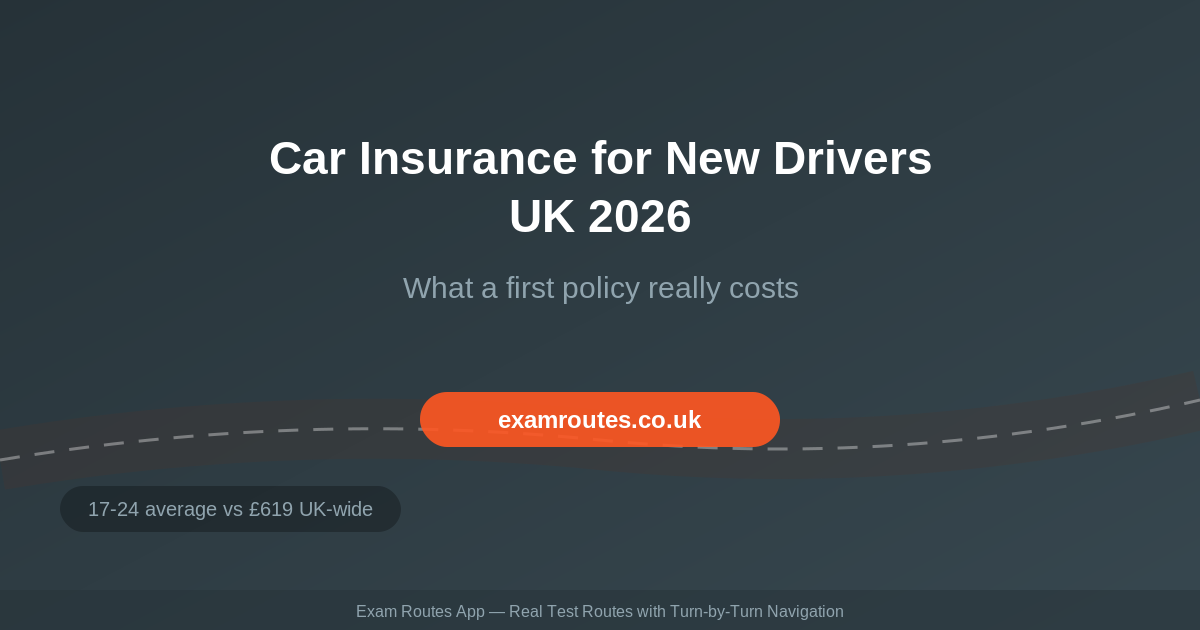
The encouraging news for 2026 is that young driver premiums have come down from their peak. Industry price indices put the average for the 17–24 age band at around £1,099 in the second quarter of 2026, compared with a UK-wide average of roughly £619 across all ages. Seventeen-year-olds specifically have seen some of the steepest year-on-year falls, in the region of 17% in recent data.
That still leaves a big gap. Here is what the numbers actually look like by age, why they are so high, and the levers that genuinely move the price.
What New Drivers Are Paying in 2026
Premiums fall sharply with each year of age, and the drop between 17 and 20 is dramatic. Recent price index data gives a picture roughly like this:
- Age 17: around £1,900–£2,000 a year on average
- Age 18: around £1,700
- Age 19: around £1,175
- Age 20: around £950
- Age 21: around £920
- Age 25–34: around £800
- All ages, UK average: around £620
These are averages, and the spread around them is enormous. Postcode, car group, annual mileage and whether you park on a drive or on the street can move a quote by hundreds of pounds. Two 18-year-olds in the same town, driving similar cars, can be quoted figures a thousand pounds apart.
Older new drivers do better. Someone passing their test at 35 will typically pay far less than a 17-year-old with the same no-claims history, because age is weighted heavily in the pricing.
Why New Driver Premiums Are So High
Insurers price risk, and the risk data for newly qualified drivers is stark. Young and inexperienced drivers are disproportionately involved in collisions, particularly in the first six to twelve months after passing, and particularly at night and with passengers of a similar age.
- No claims history. You have no record for the insurer to price against, so you are priced as the average of your group.
- Higher claim frequency in the first year of solo driving.
- Rising repair costs. Modern cars carry sensors, cameras and driver-assistance hardware in bumpers and windscreens, so even minor damage is expensive.
- Vehicle theft trends, which affect certain models and areas disproportionately.
None of this is personal. It also means the picture improves quickly: each year of clean driving and each year of no-claims bonus makes a measurable difference, and the biggest single drop tends to come between your first and second policy.
The Things That Genuinely Reduce the Price
Telematics or black box policies
These price your cover on how you actually drive — smoothness, speed, braking, cornering and often time of day — rather than only on your age. For a careful driver they are usually the cheapest route into insurance, and many offer discounts or rebates for good scores. The trade-off is that harsh driving can push the price up, and some policies restrict night-time driving or charge extra for it.
Choosing the right car
Insurance groups run from 1 to 50, and staying in the low groups matters more for a new driver than almost anything else. A small-engined, standard-specification hatchback in group 1–5 will be dramatically cheaper than the same car with a bigger engine or aftermarket modifications. Avoid modifications entirely — even cosmetic ones must be declared and typically increase the premium.
Adding an experienced named driver
Adding a parent or older relative as a named driver can reduce the price, provided you remain the main driver. Deliberately listing an experienced driver as the main policyholder when the young driver does most of the mileage is called fronting. It is insurance fraud, it invalidates the policy, and it can leave you uninsured after a claim.
Paying annually rather than monthly
Monthly instalments are a credit agreement with interest attached, often adding a substantial amount over the year. If you can pay in one go, do.
Voluntary excess, mileage and security
Raising your voluntary excess lowers the premium — but only choose an amount you could actually pay after a claim. Being honest but accurate about annual mileage helps, as does parking off-road and adding an approved immobiliser or tracker.
Advanced training
Some insurers offer a discount for completing a recognised post-test course. It is worth checking whether your chosen insurer recognises one before paying for it, as not all do.
Practise Real Test Routes on Your Phone
The Exam Routes App gives you access to real driving test routes with turn-by-turn navigation. Practise at your own pace and build confidence before test day.
Mistakes That Cost New Drivers Money
- Auto-renewing. Loyalty rarely pays. Shop around every single year, starting about three to four weeks before renewal, which is often when the cheapest quotes appear.
- Guessing your mileage. Understating it can invalidate a claim; wildly overstating it raises the price.
- Not declaring modifications or convictions. Non-disclosure is the fastest way to have a claim refused.
- Assuming third-party is cheapest. Counter-intuitively, comprehensive cover is often priced lower for young drivers, because third-party-only attracts a higher-risk profile. Always get quotes for both.
- Ignoring the excess. A cheap premium with a £1,000 total excess may be worse value than a slightly pricier policy with a sensible one.
What This Means If You Are About to Pass
Budget realistically. Add the likely insurance cost to your plans before you buy a car, not after — plenty of new drivers buy a car they can afford and then discover they cannot afford to insure it.
Remember too that the first two years after passing carry an additional risk under the New Drivers Act: accumulating six or more penalty points in that period means your licence is revoked and you return to provisional status. That is a licensing consequence, but it also has an insurance one, because points push premiums up sharply.
The practical takeaway is simple. Drive carefully in your first two years, keep your record clean, choose a modest car, and shop around every renewal. The premium you are quoted the week you pass is the highest you will ever pay.
Passing First Time Is Also a Money Saver
Every retest costs a fee, more lessons and more waiting. The cheapest driving test is the one you only take once.
The Exam Routes App gives you real UK driving test routes with turn-by-turn navigation, so you can practise the roads your examiner is likely to use before test day — and give yourself the best chance of a first-time pass.
Frequently Asked Questions
How much is car insurance for a new driver in the UK in 2026?
Recent price index data puts the 17–24 age band at an average of around £1,099 a year, against a UK-wide average of roughly £619 across all ages. Seventeen-year-olds average closer to £1,900–£2,000, falling steeply with each year of age.
Are young driver insurance prices going up or down?
They have been falling. Young driver premiums reached their lowest level in around a decade in late 2025 and have stayed broadly flat through 2026, with 17-year-olds seeing double-digit percentage falls year on year.
Is a black box policy worth it for a new driver?
For most careful new drivers, yes. Telematics prices your cover on your actual driving rather than your age alone, and often produces the cheapest quotes. Check the small print on night-time driving restrictions and mileage limits first.
Is comprehensive cover really cheaper than third party?
It often is for young drivers, because third-party-only policies attract a higher-risk customer profile. Always run quotes for both levels of cover rather than assuming.
What is fronting and why does it matter?
Fronting is naming an experienced driver as the main policyholder when a younger driver actually does most of the driving. It is insurance fraud, it invalidates the policy, and it can leave the young driver personally liable after a claim.
Does passing first time affect my insurance?
Not directly — insurers do not usually ask how many attempts it took. But passing first time saves you retest fees and extra lessons, and getting on the road sooner starts your no-claims bonus earlier.
Ready to Pass? Download Exam Routes Now
The cheapest driving test is the one you only take once. Get the Exam Routes App and practise real routes.